The Body Keeps Score
Why scaffolding always collects — and what you can do about it
I’ve been lucky enough to live in both worlds properly — the fitness industry and the scaffolding industry — and the truth is, there are a lot of similarities between them. Scaffolding isn’t just “hard work.” There are different types of work, different paces, and different demands on the body.
Street work and price work
Fast, aggressive, high output, go-go-go all day. To me, that’s very similar to CrossFit. Constant movement, awkward positions, carrying gear, explosive effort, little rest, and you’re under pressure to keep moving.
Industrial work
Some shifts are brutal in a different way. Long hours, repetitive movement, poor positions, bad access, and sometimes you’re moving for 12 hours straight. Not always at full sprint, but the body still takes a battering.
Pharmaceutical sites
It can be slower and steadier. More controlled, more stop-start, more walking, more time under tension. That’s more like a half marathon. It doesn’t always look as hard from the outside, but it still drains the body over time.
No matter what side of scaffolding you’re in, one thing stays the same — you are using the full body every day. You’re hinging, squatting, climbing, twisting, reaching, carrying, pushing, pulling, stabilising, bracing, lifting one-sided, working overhead, working off one leg, dragging, shifting, loading, unloading. It’s all there.
In my eyes, that’s what the human body is built to do. We are supposed to move. We are supposed to work. We are supposed to be strong, capable, and useful.
The problem is how we move, how often we move badly, and how little attention we give to recovery after doing it day in, day out. That’s where the trouble starts.
When you’re young, you don’t think like that. You feel bulletproof. I know because I was the same. Most lads are. You get a twinge, you laugh it off. Tight shoulder? Crack on. Sore wrist? Crack on. Back pulling a bit? Crack on. That’s scaffolding culture. Just get on with it. Don’t moan. Don’t be soft.
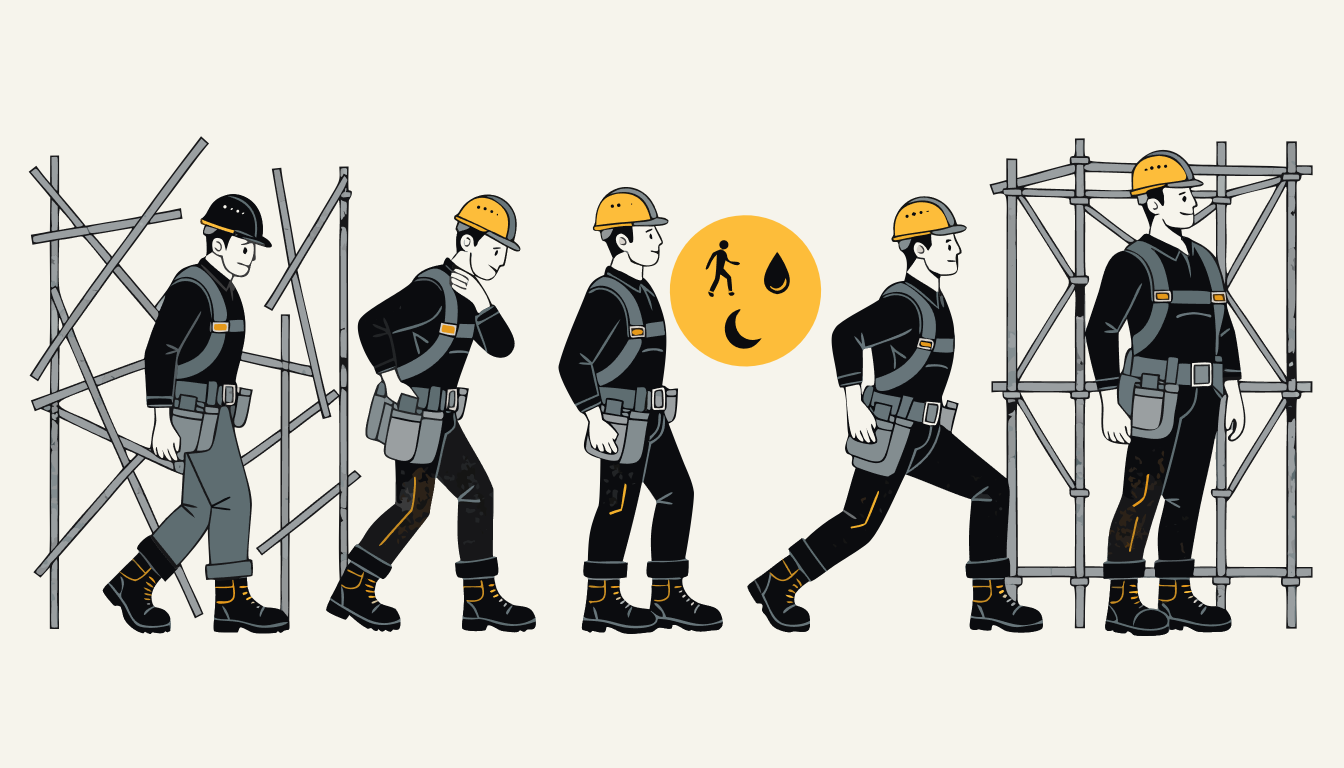
Over time, the body keeps score. That little twinge becomes a niggle. The niggle becomes compensation. Then before you know it, your shoulder’s cooked, your wrist is gone, your lower back is constantly tight, your neck’s in bits, and your knees are starting to complain too.
And this isn’t just older lads either. I’ve spoken to young scaffolders, lads under 25, who’ve already had wrist operations, shoulder problems, rotator cuff issues, elbow pain, back issues — not from big dramatic falls, but from the everyday wear and tear of the job, bad habits on site, poor lifting patterns, and doing nothing off site to balance it out.
A lot of scaffolding injuries don’t come from one massive accident. They come from repetition. They come from overload. They come from imbalance. They come from years of doing hard work with no plan for maintenance.
It’s what happens before work. It’s what happens after work. It’s how you sleep. It’s what you eat. It’s whether you move well. It’s whether you warm up. It’s whether you recover. It’s whether you’ve got the strength and control to handle the demands of the job in the first place.
ScaffStrong isn’t some magic wand. It’s not a miracle cure. It’s not pretending we can stop every injury in scaffolding, because we can’t. But what we can do is give lads better tools, better habits, better awareness, and better information so they give themselves half a chance.
A chance to move better. A chance to recover better. A chance to stay on site longer. A chance to avoid unnecessary pain. A chance to still have a body left when scaffolding is done with them.
Scaffolding gets you one way or another if you don’t look after yourself. That might offend people, but it’s true. Speak to the older scaffolders. Speak to the boys in the office. Speak to the tag man. Speak to the contracts manager. Ask them what injuries they’ve picked up over the years. It’s shocking.
What they’ll tell you
Bad shoulders. Bad backs. Trapped nerves. Worn knees. Tennis elbow. Carpal tunnel. Hip pain. Neck issues. Broken sleep. Painkiller dependence. Time off work. Operations. Missed time with family. Mood changes. Short tempers. Constant fatigue.
That’s the hidden side of scaffolding no one really talks about properly. The money gets talked about. The graft gets talked about. The banter gets talked about. But the long-term price on the body? That part usually gets brushed under the carpet until it’s too late.
The mad thing is, most of the old-school lads now say the same thing: “I wish this was around when I was on the tools.” But let’s be honest — most of them probably wouldn’t have listened back then either. They would’ve called it soft. They would’ve laughed at stretching. They would’ve taken the piss out of mobility work. They would’ve thought recovery was for athletes, not scaffolders.
And to be fair, a lot of younger lads still think the same now. They think they’re sound. They think they don’t need it. They think it’s all a load of bollocks. That’s their choice.
But injuries leave clues. Pain leaves clues. Tightness leaves clues. Fatigue leaves clues. Bad movement leaves clues. Compensation leaves clues. Your body is always telling you something. Most lads just wait until it starts screaming.
ScaffStrong isn’t about turning scaffolders into fitness influencers. It’s not making lads soft. It’s not overcomplicating things. It’s just helping hard-working men understand their body better, look after it better, and get more years out of themselves without breaking down for no reason.
Whether you want to stay on the tools for years, move into supervision, go into the office, start your own company, or just be able to play with your kids properly when you get home — your body is your earning machine. And once that starts falling apart, everything gets harder. Work gets harder. Family life gets harder. Sleep gets harder. Your head gets harder to manage. Everything starts costing more. So no, ScaffStrong isn’t a magic fix. But it might be the wake-up call a lot of lads need. Look after your body now, or scaffolding will make that decision for you later.