
Why Experienced Scaffolders Stop Talking About Pain
The silent culture of pushing through — and how to change it
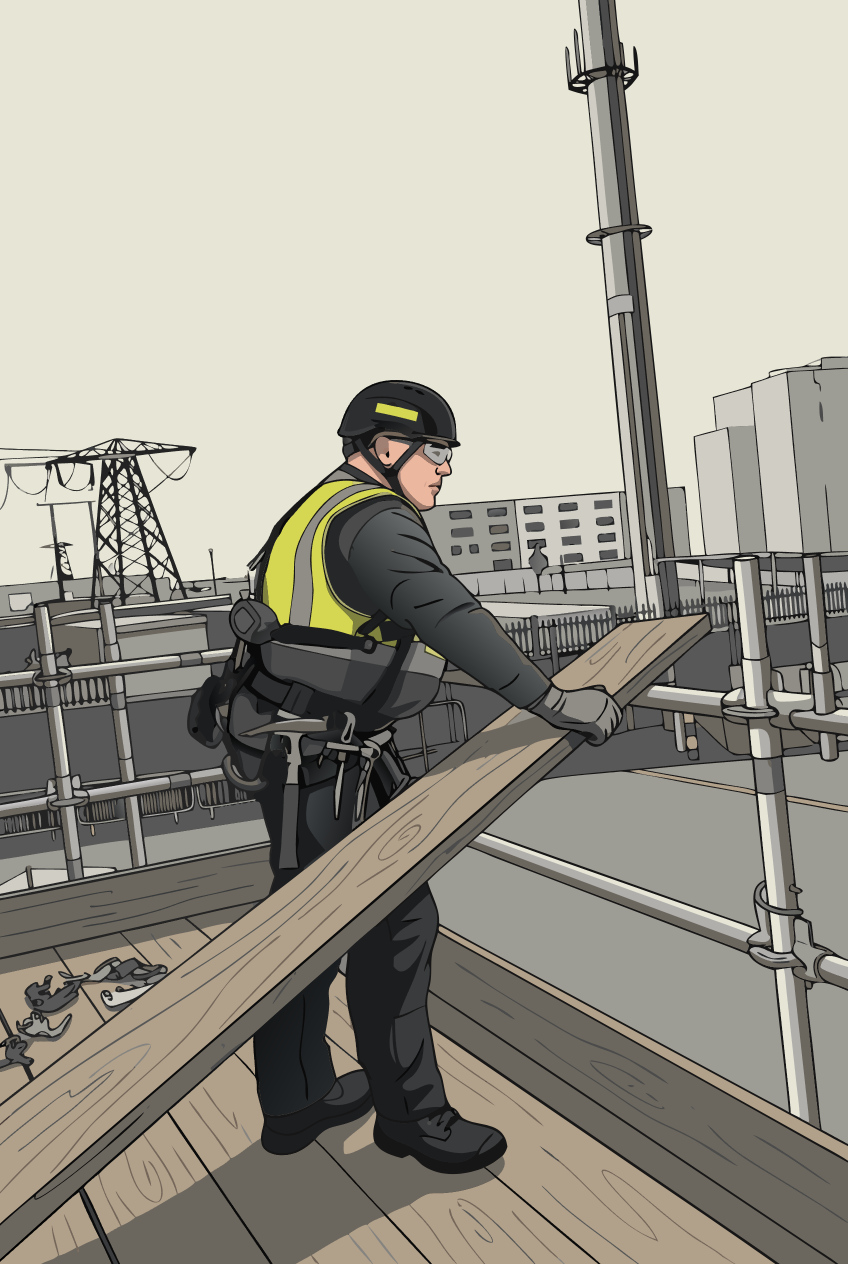
There’s a silence on every site that nobody talks about. It’s the silence of the lad who’s been on the tools for fifteen years, whose shoulder is killing him, whose back is shot, whose knees are going — and who says absolutely nothing about it.
Scaffolding has a culture. You don’t moan. You don’t complain. You don’t admit you’re in pain, because admitting pain is admitting weakness. So you crack on. You take a couple of paracetamol, you get back up the scaffold, and you say nothing.
The problem is, pain isn’t weakness. Pain is information. And when you stop talking about it, you stop dealing with it — and it becomes something much worse.
When you stop talking about pain, a few things happen. First, you stop listening to it. You train yourself to ignore the signals your body is sending. A twinge becomes background noise. A niggle becomes normal. You stop noticing how bad things have actually got.
Second, you stop getting help. If nobody knows you’re in pain, nobody can help you. Not your mates, not your supervisor, not your GP. You’re carrying it alone, and that makes it worse.
Third, you pass it on. The young lads coming through watch you say nothing, so they learn to say nothing too. The silence gets handed down like a tradition.
It’s usually the experienced lads who go quietest. When you’re young, you might mention a twinge — you get told to stop being soft, so you learn. By the time you’ve got ten or fifteen years in, you’ve been conditioned. You’ve also got more to lose: a reputation for being tough, a identity built on being the lad who can handle it.
There’s also a practical fear. If you admit you’re in pain, will you be taken off the job? Will you lose money? Will you be seen as a liability? So you keep your mouth shut and keep going.
The cost is enormous. Men who could have caught a problem early end up needing operations. Men who could have changed how they move end up unable to move at all. Men who could have had another ten years on the tools end up out of the game entirely.
And the cost isn’t just physical. Carrying chronic pain in silence affects your mood, your sleep, your relationships, your patience with your family. It changes who you are.
Start talking
Talk to your mates. Talk to your missus. Talk to your GP. Just start saying it out loud. “My back’s bad.” “My shoulder’s not right.” It’s not weak. It’s the first step to doing something about it.
Listen early
Don’t wait until you can’t work. Catch niggles early. A tight shoulder today is a frozen shoulder in six months if you ignore it.
Change the culture
If you’re a supervisor or a chargehand, make it normal to talk about it. Ask the lads how their bodies are. Make it clear that saying “my back’s bad” isn’t weakness — it’s honesty. That’s how you change a culture.
The silence on site isn’t strength. It’s a habit — and habits can change. The lads who last aren’t the ones who never feel pain. They’re the ones who talk about it early, deal with it early, and stay on the tools longer because of it. Don’t wait until the pain does the talking for you.